Jetson Project of the Month: ML-based Home Security Platform MaViS | NVIDIA Developer Blog
Extracto
A new machine learning-based security platform automatically monitors and detects people in a scene and sends captured footage to the user.
Resumen
Resumen Principal
El Jetson Project of the Month presenta MaViS (Machine Vision Security), una innovadora plataforma de seguridad residencial basada en machine learning desarrollada para el ecosistema NVIDIA Jetson. Esta solución automatiza la monitorización de entornos domésticos mediante la detección inteligente de personas en tiempo real, utilizando capacidades de procesamiento en el borde (edge computing) para una respuesta inmediata y eficiente. Cuando el sistema identifica actividad sospechosa o relevante, captura automáticamente footage y lo transmite al usuario, permitiendo una supervisión remota sin necesidad de intervención manual constante. El proyecto destaca por su integración con tecnologías avanzadas de visión por computadora y su capacidad para operar de forma autónoma, lo que lo posiciona como una herramienta poderosa para la seguridad inteligente en el hogar. Al aprovechar el hardware optimizado de NVIDIA Jetson, MaViS combina rendimiento y eficiencia energética, características esenciales para aplicaciones embebidas de larga duración.
Elementos Clave
- Detección automática de personas: El sistema utiliza algoritmos de machine learning para identificar la presencia de personas en una escena sin intervención humana, lo que mejora la reacción ante eventos relevantes.
- Captura y envío de footage: Una vez detectada una actividad, el sistema graba automáticamente el evento y lo envía al usuario, facilitando el acceso remoto a información crítica en tiempo real.
- Integración con NVIDIA Jetson: La plataforma está diseñada para aprovechar las capacidades de procesamiento de los dispositivos Jetson, garantizando inferencia rápida y eficiente en el borde.
- Aplicación en seguridad residencial: MaViS está específicamente orientada a mejorar la seguridad del hogar mediante una solución autónoma, escalable y basada en inteligencia artificial.
Análisis e Implicaciones
La implementación de MaViS representa un avance significativo en la convergencia entre seguridad física y tecnología inteligente, ofreciendo a los usuarios una alternativa automatizada y precisa frente a sistemas de vigilancia tradicionales. Al operar en el borde, el sistema reduce la dependencia de la nube, mejorando la privacidad y disminuyendo la latencia en la toma de decisiones. Esto abre nuevas posibilidades para la adopción de soluciones de seguridad accesibles y eficientes en viviendas particulares.
Contexto Adicional
El proyecto forma parte de una iniciativa mensual de NVIDIA Developer Blog que destaca aplicaciones innovadoras desarrolladas sobre la plataforma Jetson, promoviendo el uso de IA en dispositivos embebidos. MaViS ejemplifica cómo el edge AI puede transformar sectores como la seguridad, la automatización del hogar y la vigilancia inteligente.
Contenido
News Oct 05, 2021
Jetson Project of the Month: ML-based Home Security Platform MaViS
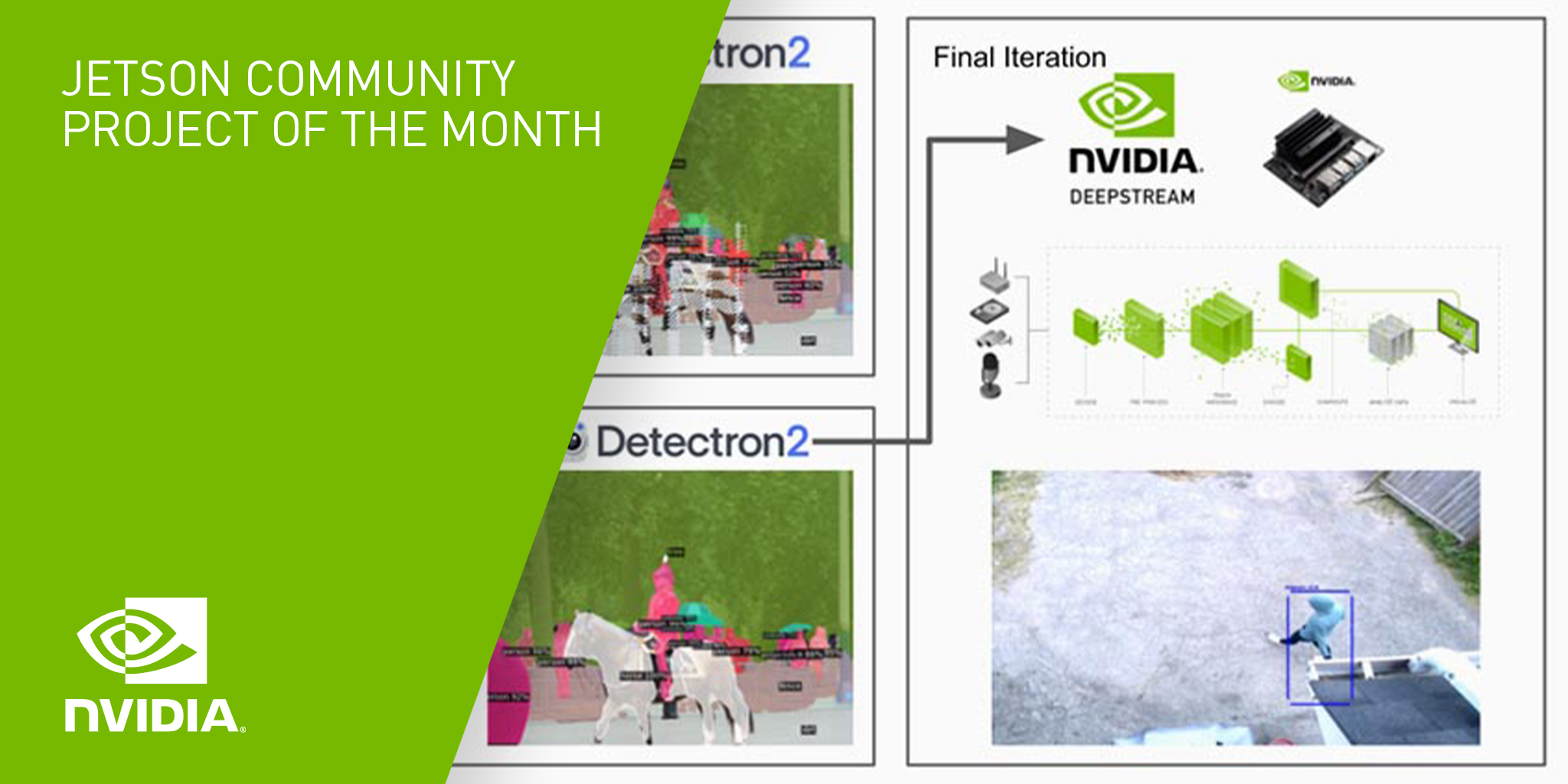
After one of his neighbors suffered from a break-in at their home, Jason Deglint and Juan Park, colleagues at Blue Lion Labs, set out to create their own intruder detection system. Featured in this Jetson Project of the Month, their machine learning-based security platform automatically monitors and detects people in a scene, and immediately sends an image and video of what has been captured on camera to the user.
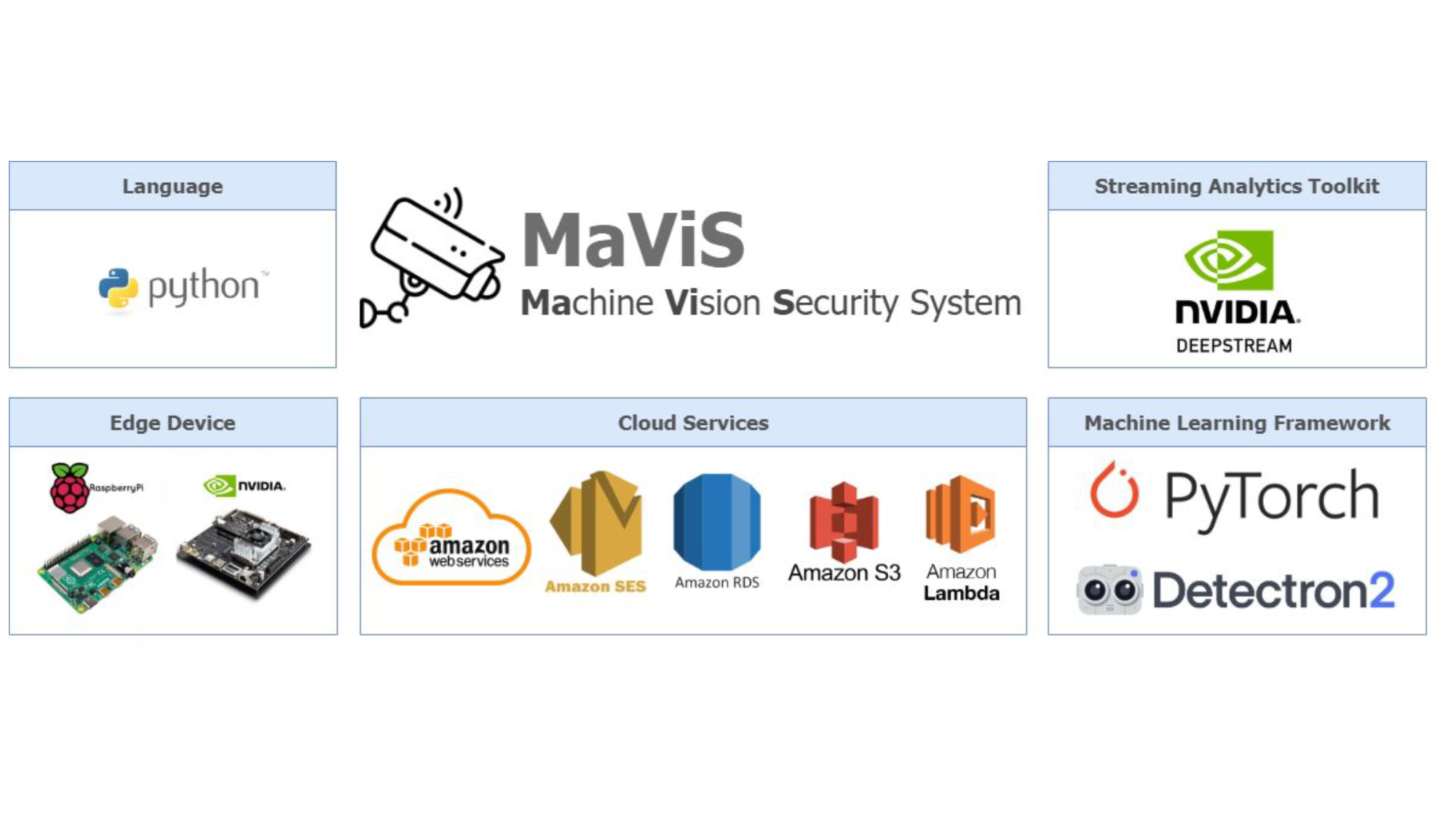
The project, which runs on an NVIDIA Jetson Nano Developer Kit, uses the NVIDIA DeepStream SDK to analyze the streamed video.
The MaViS system is composed of three parts: an edge device (in this case the NVIDIA Jetson Nano Developer Kit), the cloud, and a mobile component for alerts.
The Jetson Nano analyzes footage collected by a connected webcam in real time. The NVIDIA DeepStream SDK serves as the streaming analytics toolkit. The team chose a ResNet10 model pretrained to recognize a few classes such as a vehicle, two-wheeler, person, or road sign. For this project, the team focused on the person class to detect a possible intruder.
Detection events are sent by the Jetson Nano to an S3 bucket in the cloud, which then triggers a series of lambda functions. These functions process and return the data to the S3 bucket, while corresponding video data is stored in an Amazon RDS database. AWS SES sends an e-mail notification with data access points (including images captured) to the user. The application code running on the Jetson Nano was implemented in Python.
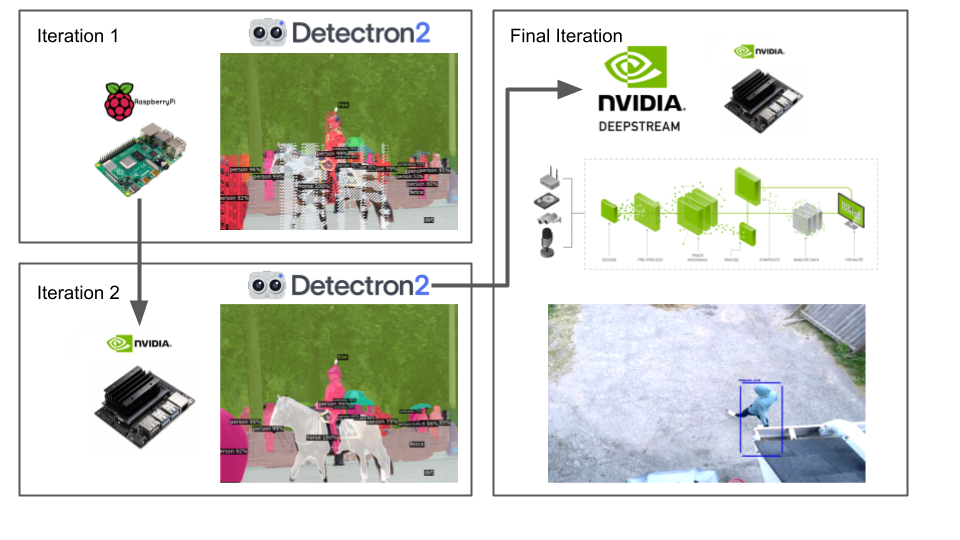
The team experimented with both Raspberry Pi and Jetson Nano on the first and second iterations of their project and decided to keep using Jetson Nano along with the DeepStream SDK for the final project iteration. This was motivated by a need to perform as much computation on the edge as possible.
An overview demo of the project is also available on YouTube.
Moving forward, the MaViS team has identified a few areas for future enhancements to this project, such as improving model accuracy and enabling local hosting for better data privacy.
View the code to learn more about how Jetson Nano is being used in MaViS.
About the Authors
Fuente: NVIDIA Developer Blog